Showing posts with label Haiti. Show all posts

Sunday, June 26, 2011

Haiti, Caribbean Princess

"Is Haiti a boy or a girl?"

This from Matthew on our way out to the car yesterday.

Ryan's sketch of  a small wooden statue I brought back from Hait.
"Haiti is an island in the Caribbean near the USA and where Mommy and Daddy met, honey."

"Yes," obviously sensing - and trying to circumvent - another lecture on people less fortunate than ourselves and our obligation to love and respect them, "but is it a boy or a girl?"

Matthew didn't get his answer.  Because I was seriously thinking about it and seriously not liking my conclusion.

You see, Haiti SHOULD be a man.  I mean, all that violence and bloodshed, all the poverty and need.  I don't want to dump this all on a woman.

Great, Haiti as a big welfare Momma.  Her children on crack and smack, in gangs and in jail.  That's what I need to be seeing in my mind's eye.

But this morning I woke up thinking about it again.  And realised that, yes, Haiti truly is a woman. 

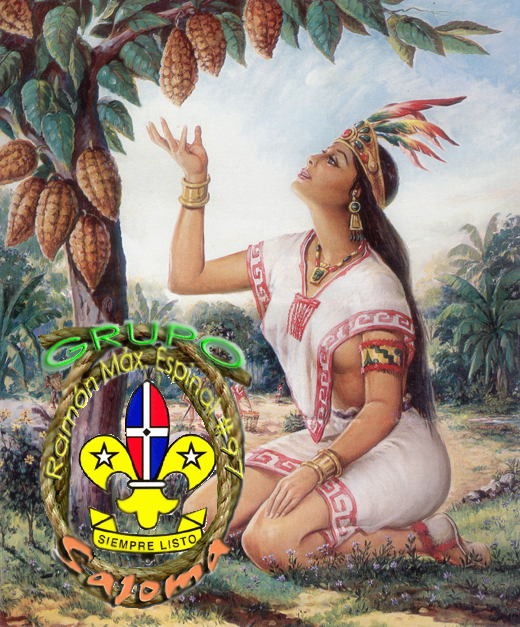
Anacaona is also revered in the Dominican Republic, Haiti's neighbour on the shared island of Dominica.
She's a Native American princess.  Ravaged by France.  Wed to Africa, in a brutal forced marriage turned love affair.  She gets her strength from a unique flavour of Africa blended with Caribbean-French and a memory, still cherished in story and song, of Anacaona, the last Taino Indian Princess, who met Columbus when he "discovered" the New World, and who fought for freedom from colonial oppression, who fought for the right of her people to survive.

And who lost. 

1492, for those of you not from the New World, and the Native Americans in Haiti were wiped out by war and disease within two decades.  Hence the need for slaves, and the brutal history of the Middle Passage, the trade of slaves from Africa to run sugar plantations in Haiti in order to make rum for Europe.

I like to think of Haiti as a "paper bag princess, " after a children's story by the same name written by Robert Munsch.  In it the princess, whose kingdom has been leveled by a dragon who has also kidnapped her intended prince, uses her wit to outsmart the dragon and free her beloved.  Dressed in a paper bag.  When her prince - still carrying his tennis racket - snubs her for her poor attire, the princess doesn't end up marrying him after all.

She knows her true self worth comes from more than what she is wearing. 

(Hmm.  Might the dragon be France - or Europe - and the prince be the neglect of the modern world?  Or should I be leaving you to draw that conclusion yourself?!)

Fairy tale endings are harder to find in real life than in childrens' books.  Robert Munsch never did specify HOW the princess managed to circumnavigate the globe on her own, in a paper bag.


Haiti's unique blend of African, French and Caribbean.
But I like to think of Anacaona and her noble African prince. Even if he is only a figment of my imagination, a symbol of multiple proud African cultures treated with less worth than animals.

I  imagine the two of them, looking down on their beloved island

Isn't it nice to imagine a fairy tale ending for Haiti, a modern-day, paper-bag, Caribbean princess?

Sunday, January 31, 2010

Cry, Haiti


Heard they are reviving the USA for Africa song "We Are The World" written by Michael Jackson in order to raise money for Haiti. It is fitting.

But as I look at the lyrics, lyrics that seemed so perfect to me as a young adult, and that are still beautiful today, they just aren't able to fill the enormity of the loss this time around.

"There comes a time....when the world must come together as one.'

"Love is all we need."

"And their lives will be stronger and free."

Tell that to the woman my friend Laurie met in the rubble of Port-au-Prince this week, the one who comes back to where her home used to stand in the hopes that God will return to her just one of her family members who died in the quake. She lost her husband, all four children, her sister and three cousins.

All four children.

And she not only still believes in God, she's still talking to him.

How are lyrics going to make this woman whole again?

How is bread going to make her want to live?

We owe Haiti international relief, long-term development and a sustainable economy. We owe it to them, and we owe it to ourselves, because Michael does have the right idea.

"There's a choice we're making. We're saving our own lives."

But what can anyone do for someone who really HAS lost everything? Does sitting here at the computer ignoring my own four children help? A new home? Electricity and a sewer system? Educational opportunities and a chance for economic advancement? Port-au-Prince as a sustainable, renewable energy-based, ecologically sound role model city of the future. Pretty words and promises.

Makes us feel pretty good about ourselves too, doesn't it?

But I cannot imagine anything that will ever, ever, EVER, make up for this one woman's loss.

In Laurie's own words, "All I could do was hold her and let her cry."

Thursday, January 21, 2010

"Gifted?" (Haiti and Tenses)


Two really important things they missed teaching me in the "gifted" program.

The first is tenses. (Not how to write a complete sentence; I don't do that on purpose sometimes.) Tenses as in past, present and future. Those three I was "gifted" enough to learn myself. But present continuous? Past perfect simple? Maybe it WAS better I never knew there were six past tenses; I might have been too scared to pick up a pen.

I distinctly remember a day in middle school when the English teacher skipped basic grammar. "Oh you guys know how to use it correctly already," she said. And proceeded on to something more creative, something better suited to our highly gifted intelligences. (My guess is that half of this "highly intelligent" class was playing paper football under their desks; I was usually reading a book under mine, having been told so many times how intelligent I was that I figured I could keep up by just being in the room. At that point, I still could too.)

Creative is good. I love creative. But now we have at least one NASA engineer, an emergency room physician, two veterinarians, a bunch of finance guys on Wall Street and some museum curators who can't write a lick of English. Oh, and all those lawyers. Never forget all those gifted lawyers. (Let's face it, I met a lot of engineers at Cornell. If there is ONE NASA engineer who can string a simple sentence together, in ANY language, I'd be surprised. 1200 SAT scores at the Cornell engineering school meant a 400 verbal.)

The problem being that one of those veterinarians decided she wants to be a writer. And the only way she can communicate with her writers' group is to say, "Oh, Like I'm like kinda like thinking like about putting it all into the 'I have danced" tense kinda like." Very impressive.

(Funny enough, they did teach us all about punctuation at some point down the line. You can see how much of that I've retained. What a waste.)

But the opportunity my teachers really missed out on came in the mid-eighties in highschool, when waves of Haitian refugees flooded the NYC area. Literally. They came in tiny wooden fishing boats through shark-infested waters. Does anyone else remember this? Word up! Haiti was hurting long before the quake on January 12. I believe that's the past continuous tense; how appropriate.

All I remember of the Haitians in my highschool was that we all considered them very odd and kind of beneath us. I mean, how stupid can you be? You come from an island that speaks French and you can't even make the grade in French class? They were also queer, in every sense of the word. The girls, and the boys, walked around holding hands. As teenagers. Same sex. Man, in retrospect those poor kids must have gotten the shit beat out of them. I wouldn't know. None of them were in the gifted program.

How hard would it have been to pair up some interested American kids with a Haitian "buddy" or two? We could have explained some things to them, maybe. We could have prevented them from getting beat up. Maybe. And we would have at least learned that they don't speak French in Haiti.

Ten years after graduation, on the day of our 10th year reunion in fact, I heard a Haitian guy my age asking about English classes at the Les Cayes community college where I was teaching. (It's okay; I wasn't teaching English grammar!) He spoke excellent English with an American accent and so I asked him where he was from. The U.S. He was in Haiti working for a program that helped Haitian kids raised in the USA repatriate back into Haiti. (Their parents didn't like the values they were growing up with in the USA.) "Where in the U.S," I asked. I had been in Haiti a while now; I had all the time in the world to stop and ask a total stranger all the intimate details of his life. He had not been in Haiti as long as I had and rolled his eyes. "Connecticut." "Oh, yeah, where in Connecticut?" I persisted. I was in dire need of any kind of entertainment. "Stamford" he replied. No way. "Westhill High School?" And now he got excited too. Westhill, it was.

He was from my graduating class in highschool, and not only had we never seen eachother before, we knew absolutely none of the same people. How sad is that? "Well, I kinda hung out with the people who really ruled the school," he said. And I thought, "Damn, all the while I thought I was the one doing that." Unbelievable. Two worlds. Living side by side and never even noticing eachother.

In the spirit of a true Haitian, I refused to let him stay in a hotel and invited him to my two-room tin-roofed hut with no running water or electrity. But we had a faucet in the yard outside and access to a neighbor's telephone. We might have had electrity sometimes too. But it almost never worked. He probably would have preferred a hotel, but the rum and cokes soon made up for my lack of amenities.

That's how I ended up spending my 10th year highschool reunion not with "gifted" lawyers and Wall Street bankers but with a member of my class who was a complete stranger to me. Something that should have happened in the past, happening in the present, for a better future. A great reunion in any tense.

Wednesday, January 20, 2010

Saving the World


When Tony walked into his living room at 10:30 last night he found Sue and about a dozen of her friends still sitting around chatting, drinking wine, and generally having a good (no, sorry, make that FANTASTIC!) time.

"So, you guys been saving the world while I was gone?" he asked.

What a good sport. Then he served Spanish cheese and Mexican something-or-other and joined us.

Were we saving the world? First we discussed English Group participation. As in, please do. Then we went over the different age groups and which children were ready to move to the next level; from the infant and mom singing circle in the preschooler group, or from the preschooler group into the BIG KIDS. Other topics of discussion included lesson plans, the Easter session and our annual summer picnic. In between we discussed what lingerie to wear to the "Teddy Bear Picnic" in the spring, what Karen and colleagues did ten years ago in Greece and what happened when her husband found out about it eight years later, and how getting your hair done professionally counts as basic standard of living once you hit a certain age.

I'm going to say we were doing our part.

When I called Sarah on Saturday night to talk to her about Haiti and about how she and her family were holding up, we spent an hour talking about...well, really talking a lot about ourselves and about our lives as women, wives and mothers. Sarah and her husband Ronald were matron of honor and best man at my wedding. (As the only two people in attendance they were also photographer and babysitter for Ryan>) I was maid of honor at their wedding in Haiti. Before all the marriage and babies, Damon and Sarah and I were Peace Corps volunteers in Haiti and Ronald was our Kreyol language instructor. (No one thought either relationship would last let alone produce six children!)

Ronald's immediate family seems to be fine, thank you for asking.

I didn't know what to expect, sobbing, grief, the tragic Haitian-American family. What I got was...well, Sarah! Haiti was obviously on our minds. We talked about Laurie and about how her whole NGO was destroyed. She has lost family, friends and colleagues. But she found that Eric, her boyfriend, was alive and doing well, after two days of believing he was dead. And all of the children from her schools in Cite-Soleil survived unharmed. There were miracles amidst the tragedy.

Then we talked about what to do. Ronald would like to go as an interpreter. Us too. And everyone returned Peace Corps volunteer from Haiti. But Diana is 36 weeks pregnant (yay!) and we, well, we have kids that need our attention. It's hard to sit by, doing the dishes and going grocery shopping, when we know we COULD be on a plane to Haiti. We could be doing great things.

I would send Damon - or go myself - if we could afford to not earn money for that length of time.

In the meantime, Sarah and I do what we can. We keep ourselves strong. We go to work. We keep the kids healthy and more-or-less decently fed. We do the dishes and the grocery shopping. I drink wine with friends and plan the annual English Group picnic.

It's weird to be going on about my everyday business when my mind is preoccupied with tragedy an ocean away. But comforting too, that Sarah is feeling the same way.

Sunday, January 17, 2010

Two Worlds

I am doing yoga in my living room in Germany late Tuesday night when the earth shakes in Haiti.

"I feel a great disturbance in the Force, as if millions of voices suddenly cried out in terror, and were suddenly silenced."
―Obi-Wan after feeling the Destruction of Alderaan[src] (Star Wars IV: A New Hope)

In contrast to Obi-Wan, I feel nothing.

Christine is at her office in Port-au-Prince late Wednesday afternoon, finishing up the proposal for the preventative health program that has to go out by Friday. The walls shake. The floor tilts. She falls to the floor. And then she feels nothing.

I do a full-body workout Wednesday morning followed by a strenuous step-aerobics class. I skip a much-needed shower in favor of a much-needed grocery run. Hotdogs, lunchmeat, butter, French fries, frozen vegetables, cereal bars, cucumbers. That should hold 'em for lunch today and for tomorrow's school snacks. For some reason, I think about how much food, and especially how much protein, this is for one family, and about how extravagant it would seem to my old family in Haiti.

Christine awakens to total darkness. She is cold and alone and afraid. She hears voices in the distance . There is screaming coming from somewhere nearby, but mostly there is grieving. It sounds far away. She reaches out her hands and finds she is in a small space. Except for a bump on her head and some scrapes on her arms and legs, she appears to be fine. There is enough room for her to crawl a few feet in any direction and to stretch her limbs, but not enough height for her to stand up.

I dump the groceries in the front seat of the VW Golf, get behind the wheel and turn the key. Nothing. Try again. Nothing. Damn. I phone in a description of my location to ADAC (AAA) and head back inside the mall. So much for extra time with the kids this afternoon. And Ryan has that big math test tomorrow . But there's nothing I can do except wait.

The walls begin to shake and crumble again at dawn. This time Christine is not so lucky. She cannot feel her legs. A large slab of concrete has fallen against her, and although she was able to push it aside, it hit her in the back on the way down. She tries to move her legs a second time and then a third. Nothing. She is no longer cold, but she is still alone and she is still afraid. There is nothing she can do except wait.

The afternoon is fairly uneventful. The VW and I make it home in plenty of time to help Ryan with her math before heading out again. We head to the DAZ (German-American Center) in Stuttgart where John Haskell is giving a reading from his latest book. It is surreal. By now I am aware of what has happened in Haiti; Damon phoned me at lunchtime while I was waiting for ADAC. I bawled my eyes out in the middle of the Chinese restaurant and then got down to the business of continuing through my day.

Christine has slid further down the building as the tremors continue throughout the day. She is no longer on the third floor, or on any floor for that matter. She is lying on her side against a slab of concrete. It – and she – are tilted at a 45 degree angle. Her legs are crumpled beneath her. It is surreal. Just three weeks ago she was in Connecticut celebrating Christmas with her family.

A bunch of us from the Writers’ Group go out after the reading. Grown-up friends with grown-up interests. Fun. And although the word ‘penis” DOES come up, I don’t have to follow anyone into the bathroom to show them where to aim it. On the drive home I am so distracted by thoughts of the evening that I take a wrong turn out of Stuttgart. I try to turn around in an empty parking lot and end up driving over an embankment. The two pylons indicating that this was clearly not an exit were hidden by snow. They are now under the VW, prohibiting it from plunging further down the embankment. What I still can’t explain is how I thought something that steep would be a parking lot exit.

Daylight fades. Christine lies numb with fear. Throughout the day she has heard the cries of people on the street, the wails of mothers looking for their children, the screams of other people trapped in other buildings. She tries to call for help, but so far no one has answered her. Her colleagues are in Les Cayes, coordinating an ongoing childhood nutrition program. Everyone else is probably too worried about their own immediate families to worry about a single aid worker working for a third-tier relief organization. She is thirsty and she knows that night is coming.

My heart stopped when the car did. This was too horrible, too absurd, to really be happening. In fact, it was almost exactly like a recurring dream I have. Either the brakes give out and I can’t stop or I do something dumb and end up hitting something. Well, there it is. Dumb. I call ADAC for the second time today and they promise to come and tow me out. But they can’t guarantee it will be for free. Seems ADAC doesn’t necessarily cover stupid. As I am waiting for ADAC to arrive, I fend off urgent offers of help from late night customers at a nearby gas station. It appears that pushing me and my old VW out of the snow bank holds more appeal than reading magazines off the rack and drinking beer. A young, questionably dressed woman offers sympathy and support, but disappears mysteriously when she discovers I don’t have any cigarettes. The police stop by, shake their heads a bit and then take off again. I can’t believe they don’t write me a ticket.

Her heart stops when she hears his voice. “ Christine. Christine. Kote ou ye? Kote ou ye Christine ? » It is Josef, her neighbor, and she can’t believe he is looking for her. “Mwen la, Josef, I am here.” She hears nothing for a moment and screams louder. “Josef, Josef, ede mwen souple, help me, please, I am here.” She hears a second voice. “Gen moun la?” “Yes, yes”, she thinks, “there is someone here, I am here, I am here.” She screams as loud as she can. “Anmwe. Anmwe. Souple. Help me. Help me. Please.” Josef and the other voice move towards her and suddenly she hears them close by, on the other side of the wall. “Christine. Christine. Kijan ou ye? E tu blese? Christine. Kijan ou ye « he asks. » How are you ? Are you hurt?” “Wi” she replies and tells him that she can’t move her legs. “Se pa mal,” Josef reassures her. They are going to get her out of there.

The ADAC guy is not very impressed with me but he has me out of there in less than five minutes.

Josef and his friend spend all night digging through the rubble to get to her. She learns that Josef’s wife and four children are safe. Their home is still standing but they are staying outside for fear of the aftershocks. There’s been an earthquake and the entire city is in ruins. Thousands are dead or trapped alive. Josef’s friend, Francois, has no family in Port-au-Prince, but is unable to get a tap-tap out of the city to go and see if they are all right. The whole thing is unreal . Even for Haiti. It’s just too big and too horrible to accept. And so they keep digging.

I can’t believe I drove my car over an embankment and was able to drive it home an hour later. No damages at all. No harm done. I keep replaying the scenario in my mind. This is going to make a great story. I have totally forgotten Haiti.

It’s dark out when they finally break through. Josef is unable to lift her. He sits by her side telling her that everything is going to be alright, that they found her, grace a dieu. “Grace of whose god,” she thinks, but she doesn’t say it. Francois returns with a wheelbarrow and they lift her into it. The two men take turns pushing her through the streets of Port-au-Prince. Everything is in ruins. There are bodies on the street, dead and dying. Everyone is outside, wandering aimlessly or sitting still. It will be dark soon. She is still thirsty. There is no water. There is no food. Her back begins to ache and then her legs. It hurts but its better than the nothing she felt before. She can’t believe this has happened. This just can’t be real.

I am listening to a RAM CD early Thursday morning. “Kote moun yo? M pa we moun yo. Kote moun yo?” It’s Richard Morse, singing political protest songs about Haiti’s tragic past. Over a decade ago Damon and I danced to this music at the Hotel Oloffson in Port-au-Prince. Today Richard Morse stands outside the hotel and twitters scenes of destruction. “Where are the people? I don’t see the people. Where are the people?” Once his cell phone runs out of batteries we can only guess.

They arrive at Josef’s home. The entire neighborhood is living in the street, although most of the houses are still standing. There is limited access to water. Josef’s wife, Nicole, hands her a tin cup and she drinks. She eats half of a three-day old roll but refuses more. There are so many children. She knows there is a world beyond the one in this neighborhood. She should try to contact the organization’s overseas office or call her parents in Connecticut to let them know that she’s okay. She also needs a hospital. But this is her world now, propped up in a wheelbarrow, around a bonfire, surrounded by families she barely knows. A woman starts singing. Others join in. Unbelievable. They are still singing to God.

Saturday, April 4, 2009

What I'm Giving Up For Lent


This idea first came to me over twelve years ago, while riding in the back of a Haitian taxi - the flatbed of an old pickup truck - with forty or so other people plus a few goats, chickens and sacks of yams. I was thinking of the reaction of my fellow Peace Corps volunteer, Sarah, when I had told her that I was going to give something up for Lent. "Good God, Christine," she'd replied, "You are NOT going to give up chocolate or alcohol or do something equally stupid." She knew me well, and she knew that we all needed our little rituals, our relief, escape from the stresses of life as a Peace Corps volunteer in rural Haiti.

As I thought it over, it became clear that the best things to give up, the ones we SHOULD give up anyway, are the things that are the worst for us. Not just at Lent. Not chocolate. Not even alcohol, or cigarettes, or other substances that aren't good for us physically.

At the time, for me, it was anger. I found this really profound at the time. I would give up my anger, at the apparent apathy of the Haitian people, at the apparent indifference of the governments - ours and theirs, at the inability to really get anything done, the inability to help the way I really wanted to.

In retrospect, anger at the fact that things weren't going my way. But that's ANOTHER essay.

Lately, I've stopped judging others. When I heard about the fifteen year old girl in England who had had a baby - with three thirteen to fifteen year old boys claiming paternity - my first thought STARTED to be, where the hell were the parents? But it stopped halfway out. My God, in six years MY daughter will be fifteen. I can't even get her to do her MATH homework right now. You think she's going to listen to me about condoms? Let alone abstinence.

And there's another essay writing itself.